
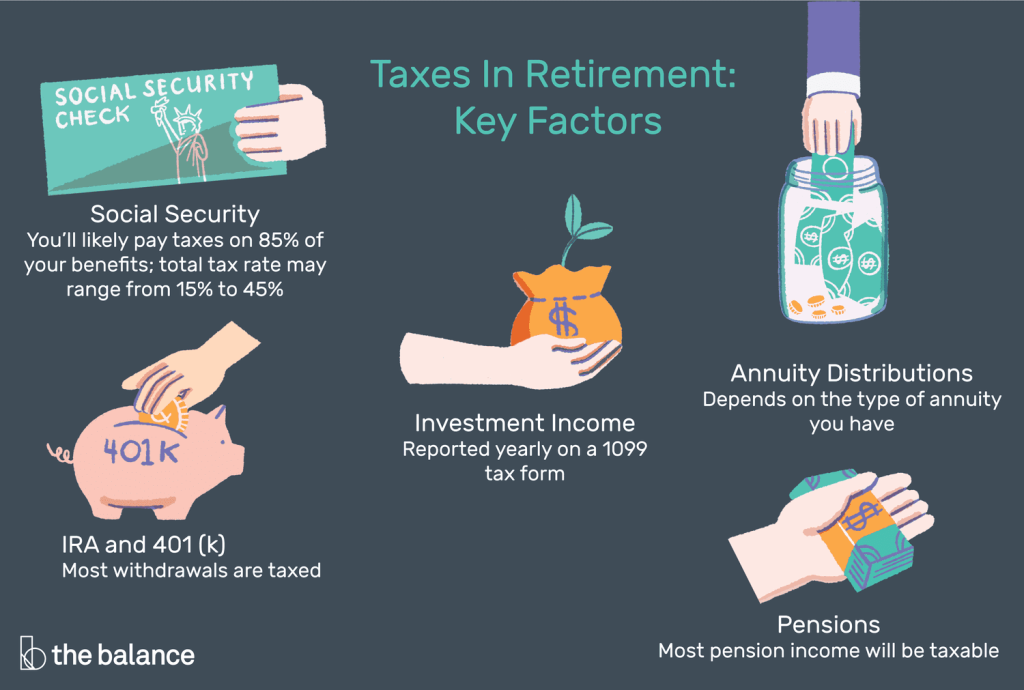
Navigating the intricacies of retirement accounts can be daunting, but understanding their tax benefits is pivotal for optimizing your financial strategy. This comprehensive guide explores the multifaceted tax benefits of retirement accounts, illuminating how these advantages can enhance your savings and secure a more prosperous future.
1. Introduction to Retirement Accounts and Their Tax Advantages
Retirement accounts are essential tools for long-term financial planning, offering significant tax incentives that can accelerate wealth accumulation. These accounts not only facilitate disciplined saving but also provide a range of tax benefits that can substantially increase your retirement savings.
1.1. The Role of Tax Benefits in Retirement Planning
Tax benefits play a crucial role in retirement planning, influencing decisions on contributions, investments, and withdrawals. By leveraging these advantages, individuals can maximize their savings and minimize their tax liabilities over time.
2. Traditional Individual Retirement Accounts (IRAs)
Traditional IRAs are renowned for their immediate tax benefits, which can be particularly advantageous for individuals seeking to reduce their current taxable income.
2.1. Tax Deductibility of Contributions
Contributions to a Traditional IRA may be tax-deductible, effectively lowering your taxable income for the year you make the contribution. This deduction is subject to income limits and participation in an employer-sponsored retirement plan.
- Deduction Limits: For 2024, the maximum deductible contribution is $6,500 per year, with an additional $1,000 catch-up contribution allowed for those aged 50 and above.
2.2. Tax-Deferred Growth
One of the primary benefits of a Traditional IRA is tax-deferred growth. Earnings within the account are not subject to taxes until withdrawals are made, allowing investments to grow without the immediate burden of taxation.
2.3. Taxation Upon Withdrawal
Withdrawals from a Traditional IRA are taxed as ordinary income. Early withdrawals before age 59½ may incur a 10% penalty, though there are exceptions for specific circumstances such as higher education expenses or first-time home purchases.
3. Roth Individual Retirement Accounts (IRAs)
Roth IRAs offer a different set of tax benefits, focusing on long-term tax-free growth and withdrawals.
3.1. Tax-Free Withdrawals
Contributions to a Roth IRA are made with after-tax dollars, meaning you pay taxes on the money before it is contributed to the account. The significant advantage is that qualified withdrawals are tax-free, including both contributions and earnings.
- Qualified Withdrawals: To enjoy tax-free withdrawals, you must be at least 59½ years old and have held the account for at least five years.
3.2. No Required Minimum Distributions (RMDs)
Unlike other retirement accounts, Roth IRAs do not require RMDs during the account holder’s lifetime. This feature provides greater flexibility in managing withdrawals and tax liabilities in retirement.
3.3. Contribution Limits
For 2024, the contribution limit for a Roth IRA is $6,500 per year, with an additional $1,000 catch-up contribution for those aged 50 and above. Income limits apply to determine eligibility for contributing to a Roth IRA.
4. 401(k) Plans
401(k) plans are employer-sponsored retirement accounts that offer substantial tax benefits, making them a popular choice for many workers.
4.1. Tax-Deferred Contributions
Contributions to a 401(k) plan are made with pre-tax dollars, reducing your taxable income for the year. This immediate tax benefit can lower your current tax bill and enhance your overall savings.
- Contribution Limits: For 2024, the contribution limit for a 401(k) plan is $22,500 per year, with a $7,500 catch-up contribution allowed for those aged 50 and above.
4.2. Employer Matching Contributions
Many employers offer matching contributions to 401(k) plans, which can further increase your retirement savings. These contributions are also tax-deferred and can significantly boost your overall retirement fund.
4.3. Taxation Upon Withdrawal
Withdrawals from a 401(k) plan are taxed as ordinary income. Early withdrawals before age 59½ may incur a 10% penalty, although there are exceptions for certain situations like hardship withdrawals.
5. Roth 401(k) Plans
Roth 401(k) plans combine features of both Roth IRAs and traditional 401(k) plans, providing a unique set of tax benefits.
5.1. Tax-Free Withdrawals
Contributions to a Roth 401(k) are made with after-tax dollars, similar to a Roth IRA. Qualified withdrawals are tax-free, which can be advantageous if you anticipate being in a higher tax bracket in retirement.
- Contribution Limits: The contribution limits for Roth 401(k) plans are the same as traditional 401(k) plans: $22,500 per year, with an additional $7,500 catch-up contribution for those aged 50 and above.
5.2. No RMDs During Lifetime
Like Roth IRAs, Roth 401(k) plans offer the benefit of no RMDs during the account holder’s lifetime. However, RMDs apply once the account holder reaches age 73.
5.3. Withdrawal Rules
To enjoy tax-free withdrawals from a Roth 401(k), you must be 59½ years old and have held the account for at least five years. Non-qualified withdrawals are subject to income tax and penalties.
6. Simplified Employee Pension (SEP) IRAs
SEP IRAs are tailored for self-employed individuals and small business owners, offering high contribution limits and beneficial tax treatments.
6.1. High Contribution Limits
For 2024, contributions to a SEP IRA can be up to $66,000 or 25% of compensation, whichever is less. This high limit allows for substantial tax-deferred savings.
6.2. Tax-Deductible Contributions
Contributions to a SEP IRA are tax-deductible, reducing your taxable income for the year. This feature can significantly enhance your tax savings and retirement planning.
6.3. Taxation Upon Withdrawal
Withdrawals from a SEP IRA are taxed as ordinary income. Early withdrawals before age 59½ may incur a 10% penalty, although exceptions exist for specific situations.
7. Savings Incentive Match Plan for Employees (SIMPLE) IRAs
SIMPLE IRAs provide a straightforward and cost-effective retirement saving option for small businesses and self-employed individuals.
7.1. Contribution and Matching
For 2024, employees can contribute up to $15,500 to a SIMPLE IRA, with a $3,500 catch-up contribution for those aged 50 and above. Employers are required to contribute either a matching percentage or a fixed contribution.
7.2. Tax-Deductible Contributions
Contributions to a SIMPLE IRA are tax-deductible, providing immediate tax benefits. This simplifies tax planning and enhances retirement savings.
7.3. Withdrawal Rules
Withdrawals from a SIMPLE IRA are taxed as ordinary income, with a 25% penalty for early withdrawals within the first two years of participation. After two years, the penalty decreases to 10%.
8. Health Savings Accounts (HSAs)
HSAs are primarily used for healthcare expenses but also offer unique tax benefits that can supplement retirement planning.
8.1. Triple Tax Advantage
HSAs offer a triple tax advantage: contributions are tax-deductible, earnings grow tax-deferred, and withdrawals for qualified medical expenses are tax-free. This makes HSAs a versatile tool for managing healthcare costs and retirement savings.
8.2. Contribution Limits
For 2024, the contribution limit for an HSA is $3,850 for individuals and $7,750 for families. Individuals aged 55 or older can contribute an additional $1,000.
8.3. Withdrawal Rules
Withdrawals for non-medical expenses before age 65 are subject to ordinary income tax and a 20% penalty. After age 65, withdrawals for non-medical expenses are taxed as ordinary income but are not subject to penalties.
9. Strategic Utilization of Retirement Accounts
To maximize the tax benefits of retirement accounts, consider the following strategies:
- Diversify Contributions: Utilize a mix of Traditional IRAs, Roth IRAs, and employer-sponsored plans to balance tax benefits and savings goals.
- Maximize Employer Matching: Take full advantage of employer matching contributions to a 401(k) or Roth 401(k).
- Plan Withdrawals Strategically: Develop a withdrawal strategy that considers tax implications and required distributions to optimize tax efficiency in retirement.
10. Conclusion
Understanding the tax benefits of retirement accounts is crucial for maximizing your savings and achieving long-term financial stability. By leveraging the unique features of each retirement account, individuals can enhance their financial strategy, reduce their current tax liabilities, and secure a more prosperous retirement. For further information on retirement planning and account options, explore resources available at bandpaid.com.